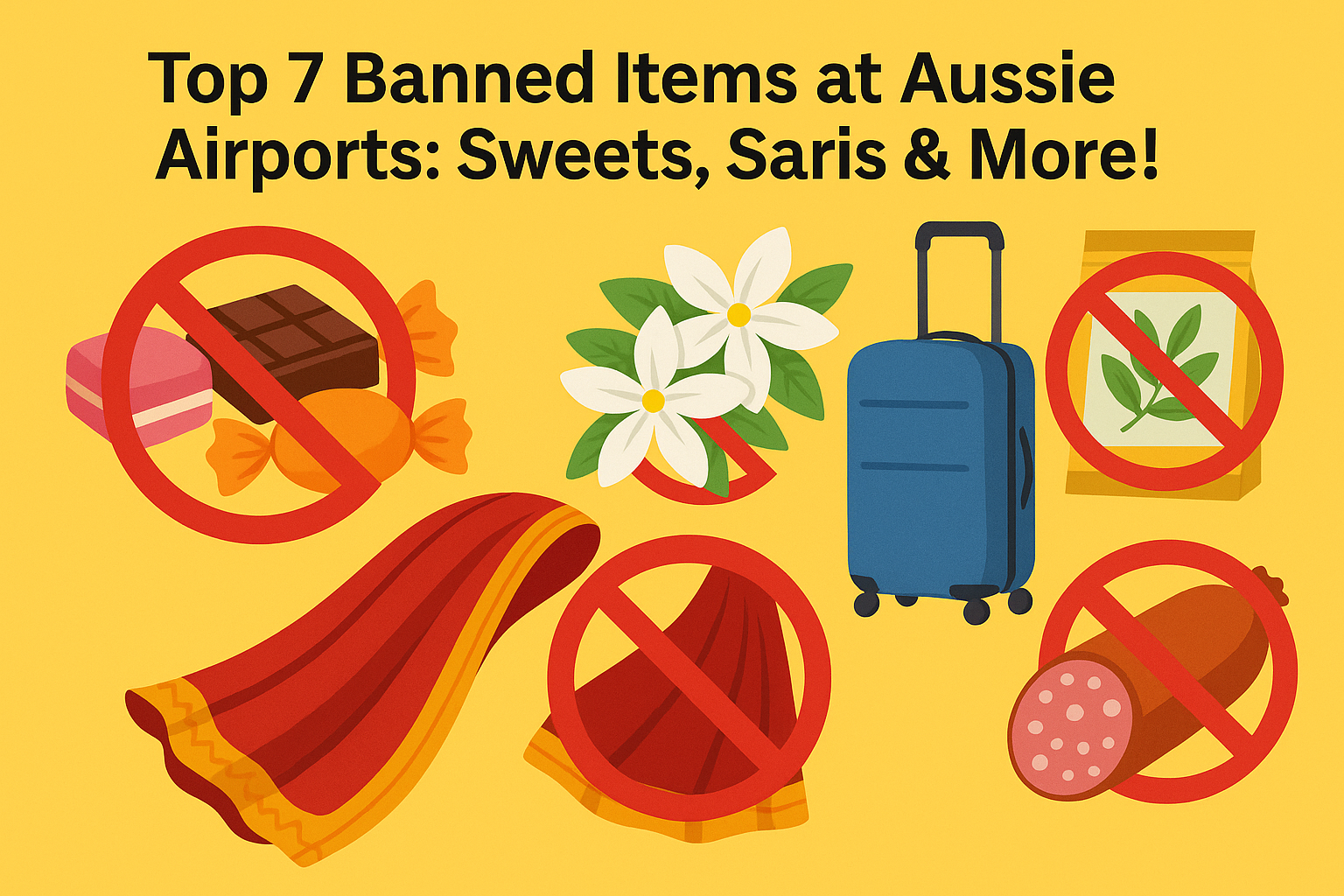
Traveling internationally comes with its own set of rules and regulations, especially when it comes to carrying food, clothing, and other personal items. Australia is known for its strict biosecurity laws, aimed at protecting its unique environment from pests, diseases, and contaminants. Recently, a list of items banned at airports across the country has gone viral, highlighting some unusual items travelers are often unaware of.
In this article, we’ll explore the Top 7 Banned Items at Aussie Airports: Sweets, Saris & More!, explain why these restrictions are in place, and offer tips on how to travel hassle-free. Whether you’re a frequent traveler or planning your first trip, understanding these rules can save you from fines and delays.
Why Are These Items Banned?
Australia’s isolation has allowed its flora and fauna to evolve uniquely over millions of years. This fragile ecosystem is highly susceptible to external threats such as invasive species, bacteria, and plant diseases. Customs and biosecurity measures are designed to keep out risks that could potentially harm agriculture, biodiversity, and public health.
The Top 7 Banned Items at Aussie Airports: Sweets, Saris & More! are not chosen arbitrarily but reflect the country’s stringent approach toward safeguarding its environment.
1. Sweets and Confectionery
One of the most surprising entries in the Top 7 Banned Items at Aussie Airports: Sweets, Saris & More! is sweets and chocolate-based products. While these may seem harmless, many contain dairy, nuts, or other organic ingredients that could carry pests or diseases.
Especially homemade sweets or treats from countries with different pest risks are flagged. Travelers carrying packaged chocolates or candies should check labels and declare them upon arrival to avoid penalties.
2. Fresh Fruits and Vegetables
Fresh produce is a major concern for Australia’s biosecurity. Fruits, vegetables, seeds, and herbs may harbor insects, bacteria, or fungi that can wreak havoc on local crops and natural ecosystems.
Even if produce is cleaned or wrapped, it’s often prohibited. This makes fresh fruits and vegetables one of the most common entries in the Top 7 Banned Items at Aussie Airports: Sweets, Saris & More! checklist.
3. Homemade or Unlabeled Food
Food items without proper labeling or packaging are automatically suspect. Homemade snacks, pickles, and traditional preparations from home countries are not permitted unless accompanied by documentation proving their safety.
This category also includes foods with ambiguous ingredients that biosecurity officers cannot verify instantly, making them part of the Top 7 Banned Items at Aussie Airports: Sweets, Saris & More!
4. Sari Fabrics and Natural Fibers
While clothing items are typically allowed, certain textiles such as saris made from untreated natural fibers can be a biosecurity concern. These fabrics may carry insects, spores, or plant-based residues.
Especially those crafted using plant-based dyes or materials are closely inspected. As a result, saris and other traditional garments fall under the Top 7 Banned Items at Aussie Airports: Sweets, Saris & More!, surprising many travelers.
5. Flowers, Plants, and Seeds
Flowers like jasmine or other fragrant blooms are often considered agricultural risks. Navya Nair’s recent fine for carrying jasmine flowers serves as a cautionary example of how seemingly harmless items can trigger regulatory action.
Plants, seeds, bulbs, and cut flowers are highly scrutinized due to the potential introduction of soil-borne diseases or pests. Flowers form a crucial part of the Top 7 Banned Items at Aussie Airports: Sweets, Saris & More!
6. Meat, Poultry, and Dairy Products
Uncooked or improperly processed meat, dairy products, and fish are considered biosecurity hazards. These can carry diseases like foot-and-mouth disease, avian flu, or other infections that threaten agriculture.
Even vacuum-sealed or frozen products are often prohibited unless supported by health certifications. As such, these products are regular entries in the Top 7 Banned Items at Aussie Airports: Sweets, Saris & More!
7. Herbal and Traditional Medicines
Herbal remedies, oils, and powders from foreign countries can carry contaminants or be unregulated substances. Without proper testing or approval, customs officials treat them as risks.
Many travelers pack herbal medicines or oils for wellness during travel, unaware that these fall under strict inspection protocols, rounding out the Top 7 Banned Items at Aussie Airports: Sweets, Saris & More!
What Happens If You Don’t Declare These Items?
Failing to declare restricted items can lead to hefty fines, confiscation, or even legal action. Navya Nair’s fine for carrying jasmine flowers is a recent example of how serious these measures are. Officers are trained to detect prohibited items, and travelers are required to fill out declaration forms honestly.
Australia’s customs department encourages full disclosure to ensure a smooth entry process. Declaring items upfront can save travelers from unnecessary penalties and ensure compliance with environmental protection laws.
How to Travel Smoothly Through Aussie Airports
With the Top 7 Banned Items at Aussie Airports: Sweets, Saris & More! in mind, here are a few practical tips:
- Check Before You Pack – Review Australia’s official biosecurity guidelines before traveling.
- Declare Everything – Honesty is the best policy; declare any food, plant, or natural items you’re carrying.
- Avoid Homemade Goods – Stick to commercially sealed and labeled products with clear ingredient lists.
- Be Mindful of Cultural Gifts – While sharing sweets or flowers is common in many cultures, consider alternative gifts that meet customs regulations.
- Consult Airline Websites – Airlines often have checklists and advisories for international travelers heading to Australia.
The Bigger Picture – Protecting Australia’s Environment
The strict screening process behind the Top 7 Banned Items at Aussie Airports: Sweets, Saris & More! reflects Australia’s commitment to preserving its natural heritage. Many invasive species and diseases could jeopardize agriculture, wildlife, and even public health.
Travelers’ cooperation plays a vital role in maintaining this protection system. Educating oneself about prohibited items ensures that cultural exchanges and tourism continue without risking environmental harm.
Final Thoughts
The Top 7 Banned Items at Aussie Airports: Sweets, Saris & More! may sound unusual, but each restriction is backed by scientific research and environmental concerns. Whether it’s sweets, flowers, or traditional garments, travelers need to be aware of what they can and cannot bring to Australia.
Understanding these rules not only helps avoid fines but also contributes to safeguarding the country’s unique biodiversity. As global travel increases, responsible behavior ensures that everyone can enjoy the beauty of Australia without compromising its delicate ecosystem.
Plan ahead, declare honestly, and embrace eco-friendly travel to ensure your trip is smooth and enjoyable. The next time you pack your bags, remember the Top 7 Banned Items at Aussie Airports: Sweets, Saris & More! and make informed choices.