Introduction
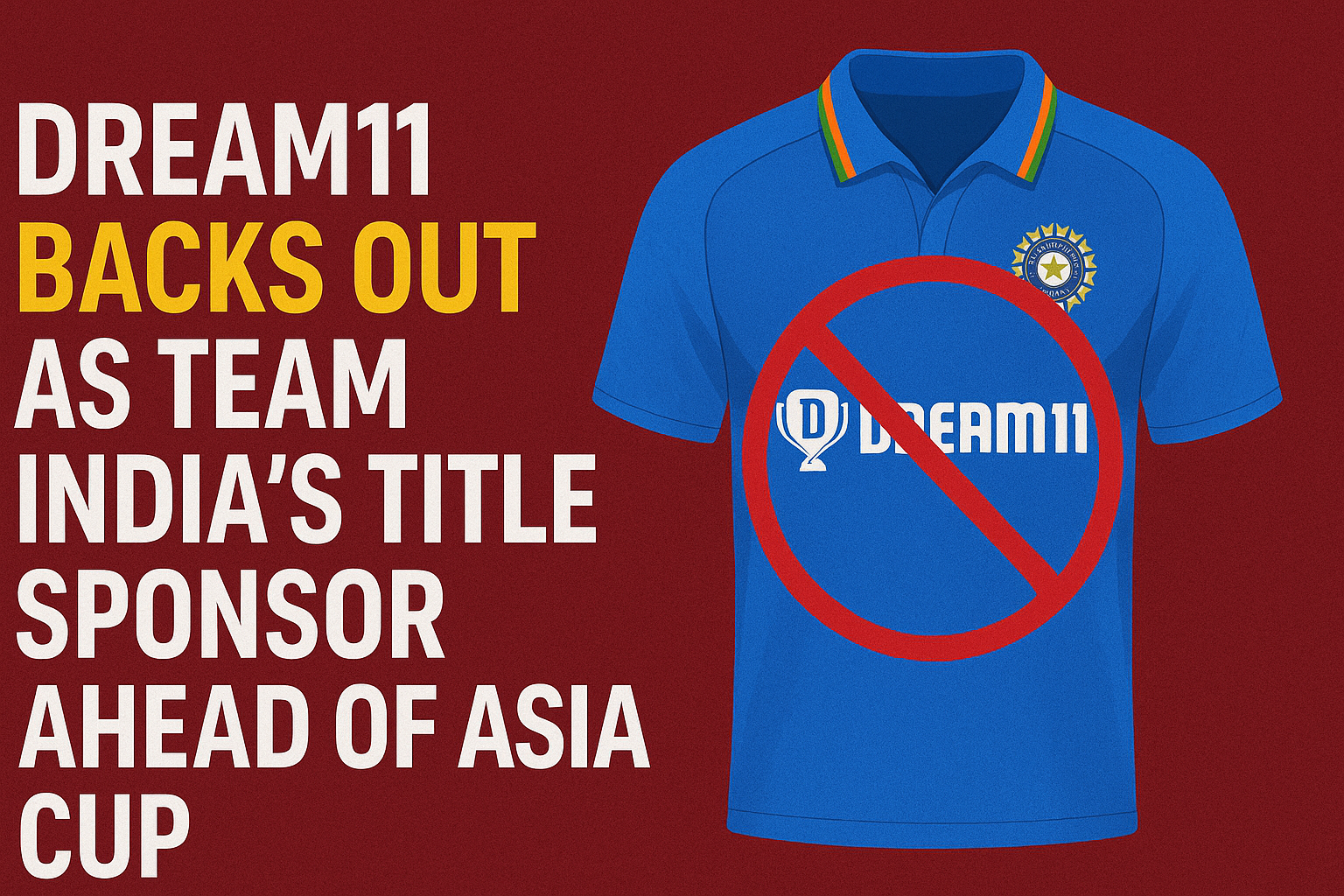
In a surprising turn of events, fantasy sports giant Dream11 has reportedly withdrawn from its role as the title sponsor of Team India’s jersey just ahead of the Asia Cup 2025. This development comes at a critical time for Indian cricket, as the team gears up for one of the most prestigious tournaments in the region.
The decision is closely tied to the new Online Gaming Bill 2025, recently passed by the Indian Parliament, which bans all forms of real-money gaming, including fantasy sports platforms. With Dream11’s exit, the Board of Control for Cricket in India (BCCI) faces not only a commercial challenge but also a reputational and logistical one.
This article breaks down the sponsorship saga, the impact of India’s new gaming law, and what this change could mean for cricket fans, players, and the business of sports in India.
The Rise of Dream11 as Team India’s Jersey Sponsor
A Landmark Sponsorship Deal
Dream11 became the lead jersey sponsor for the Indian cricket team in July 2023, after winning the bid for sponsorship rights until March 2026. The deal was valued at over ₹350 crore, making it one of the most lucrative sponsorships in Indian cricket’s history.
For Dream11, the partnership was not only a matter of visibility but also a chance to cement its place as the leading fantasy sports brand in the country. For the BCCI, it ensured a steady stream of revenue and reinforced the growing synergy between cricket and the digital gaming industry.
Why the Partnership Mattered
- Global Visibility: Team India’s jersey is one of the most watched in the world. Having its logo placed on the front guaranteed Dream11 unparalleled global exposure.
- Digital Engagement: With fantasy sports rapidly gaining popularity, the sponsorship symbolized how new-age tech companies were replacing traditional FMCG and telecom brands in cricket sponsorships.
- Financial Security: For BCCI, such deals add to its massive financial base, funding grassroots programs and supporting domestic cricket.
However, the honeymoon phase was short-lived.
The Online Gaming Bill 2025: A Turning Point
What the Law States
The Promotion and Regulation of Online Gaming Bill, 2025, brought a seismic change to the gaming industry in India. The legislation bans all platforms offering real-money games, including poker, rummy, betting, and fantasy sports. Companies operating in this sector face restrictions on advertising, partnerships, and sponsorship deals.
Why It Matters for Cricket
Since Dream11’s business model is based on real-money fantasy sports, the company’s operations now fall under the banned category. This means any continued association with Team India would not only be controversial but also potentially illegal.
The BCCI, through its secretary Devajit Saikia, clarified that the board would abide by national laws and would not engage in sponsorship agreements with companies that operate outside the legal framework.
Dream11’s Withdrawal: What We Know
Though no official statement has been released by either Dream11 or the BCCI, multiple sources confirm that Dream11 has backed out of its sponsorship obligations ahead of the Asia Cup. This effectively leaves Team India without a lead jersey sponsor for the tournament unless a new partner steps in quickly.
Timing of the Exit
The exit couldn’t have come at a more sensitive time. With the Asia Cup just weeks away, BCCI will need to urgently identify new sponsors, initiate bidding processes, and negotiate contracts—all under strict time constraints.
Impact on Team India and the BCCI
Financial Implications
The sponsorship deal with Dream11 was a multi-crore revenue stream for BCCI. With Dream11 out, there’s a potential short-term loss of income unless a new sponsor is brought in swiftly. While BCCI is financially robust, missing out on such a high-value deal is bound to create a gap.
Branding Challenges
If BCCI fails to sign a new sponsor before the Asia Cup, Team India could enter the tournament with a blank jersey—something unusual in modern cricket where branding dominates. Such a scenario would not only reduce visibility for sponsors but also impact India’s image as a cricketing superpower with strong commercial backing.
Reputational Concerns
For BCCI, this episode highlights the risks of relying heavily on sponsors from industries prone to regulatory uncertainties. Earlier, telecom, airline, and real-estate companies dominated jersey sponsorships. But many of them faced financial difficulties, leading to abrupt exits. Dream11 now joins that list, underlining the instability of such arrangements.
The Broader Industry Perspective
Sponsorship in Indian Cricket: A History of Uncertainty
Interestingly, jersey sponsorship in Indian cricket has often been dogged by problems. From Sahara and Sahara India Pariwar in the 2000s to Oppo, Byju’s, and now Dream11, each sponsor has exited before the completion of its contract due to regulatory, financial, or strategic issues.
The Fantasy Sports Industry at Crossroads
The ban on real-money gaming has left companies like Dream11, My11Circle, and MPL in deep trouble. Their business models now stand invalid in India, forcing them to either shut down or pivot. This raises broader questions:
- Will fantasy sports survive in India in a free-to-play format?
- Can companies sustain without real-money engagement?
- How will this affect sponsorships in other sports such as kabaddi and football?
Possible Alternatives for BCCI
New Sponsorship Bids
BCCI is expected to invite fresh bids for jersey sponsorship ahead of the Asia Cup. Potential candidates could include large corporations from sectors like FMCG, e-commerce, finance, or telecom. Companies with deep pockets and no legal complications are likely to dominate the bidding.
Long-Term Strategy
Going forward, BCCI may need to:
- Diversify Sponsorship Portfolios: Avoid heavy reliance on companies from volatile sectors.
- Focus on Brand Security: Partner with established global corporations with stable reputations.
- Legal Vetting: Ensure sponsors do not fall under legal grey zones to avoid mid-contract disruptions.
Fan Reactions and Public Sentiment
Fans’ Concerns
Among fans, Dream11’s exit has triggered mixed reactions. Some see it as a necessary step in compliance with law, while others worry it leaves Team India in an awkward commercial position right before a major tournament. Many also question why sponsorships repeatedly face instability in Indian cricket.
Broader Discussions
The episode has reignited debates around:
- The ethics of associating sports with gambling or real-money gaming.
- The role of government in regulating fantasy sports.
- Whether cricket boards should prioritize financial gains over long-term brand integrity.
The Asia Cup 2025 Without a Sponsor?
If no replacement sponsor steps in quickly, the Asia Cup could witness Team India’s players taking the field in jerseys without a commercial logo on the front. While this would not affect the team’s performance, it would be a rare sight in modern cricket where sponsorship visibility is considered essential.
Such a scenario could also make global headlines, reminding the cricketing world of the powerful intersection between law, business, and sport in India.
Lessons from Dream11’s Exit
For BCCI
- Need for Caution: Choose sponsors less likely to face legal uncertainties.
- Reputation Management: Maintain cricket’s global image despite sponsor instability.
- Diversification: Explore multi-sponsor deals instead of relying on a single entity.
For Brands
- Risk Assessment: Aligning with cricket brings visibility but also regulatory scrutiny.
- Long-Term Planning: Companies should anticipate potential regulatory changes before entering multi-year sponsorship deals.
For Fans
- Awareness: Understand that sponsorship changes don’t affect the team’s performance but can impact cricket economics.
- Critical View: Evaluate whether fantasy gaming should be tied so closely with national sports.
Conclusion
Dream11’s decision to withdraw as Team India’s title sponsor marks a significant turning point for Indian cricket. The move reflects how government regulations can reshape the sponsorship landscape overnight, leaving even the most powerful sporting bodies scrambling for solutions.
For BCCI, the challenge now lies in securing a new sponsor that not only matches the financial clout of Dream11 but also ensures long-term stability. For Dream11 and the fantasy sports industry, the road ahead is uncertain as they grapple with survival in a market that has turned hostile to real-money gaming.
As India heads into the Asia Cup 2025, one thing is clear: cricket remains more than just a sport in India—it is deeply intertwined with business, law, and national sentiment. Dream11’s exit is not just the end of a sponsorship deal; it’s a lesson in the volatile intersection of sports, money, and regulation.
One thought on “Dream11 Withdraws as Team India’s Title Sponsor Just Before Asia Cup”
Comments are closed.