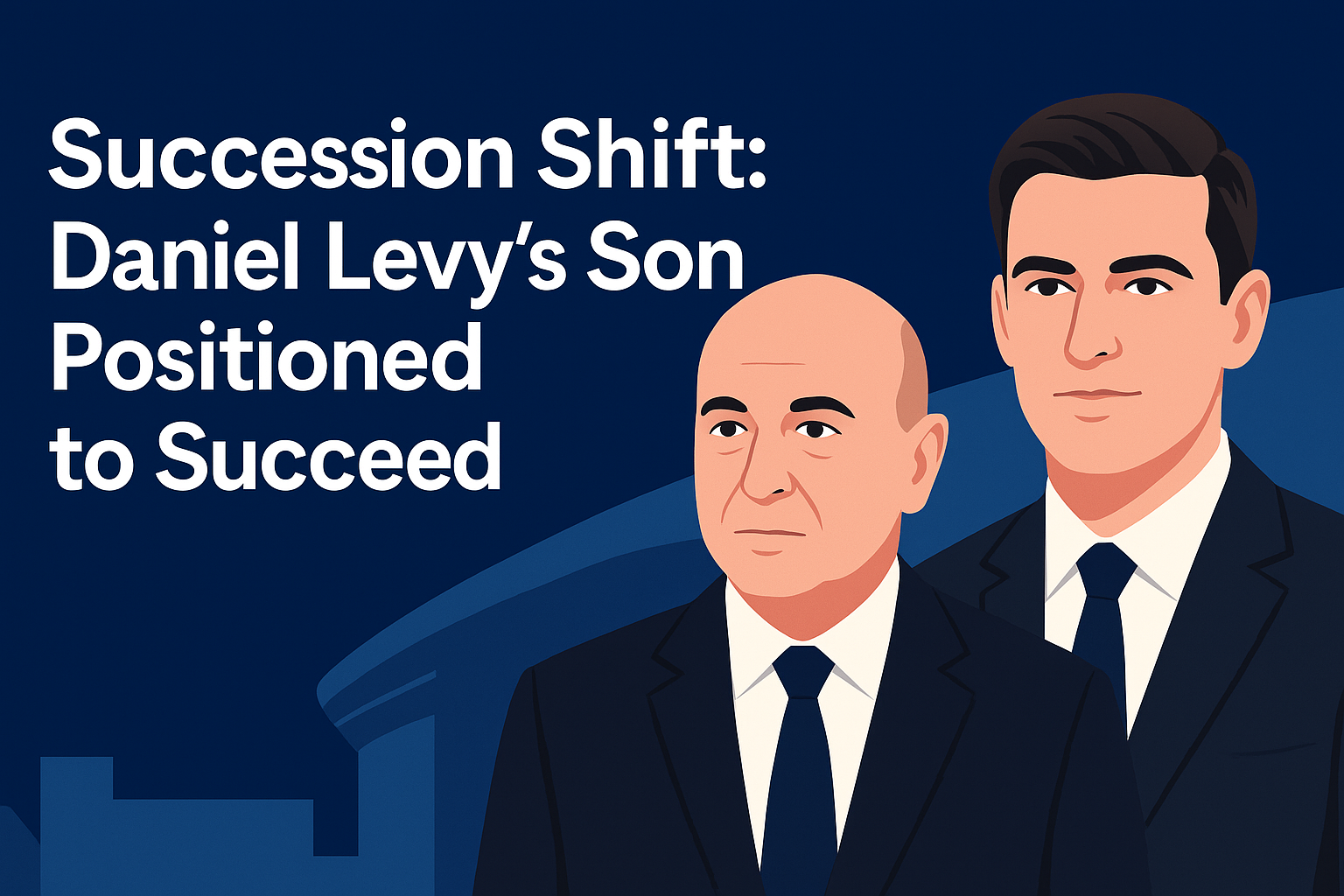
Family-run businesses have always fascinated the corporate world. In industries ranging from real estate to retail, the question of leadership transfer often sparks as much intrigue as it does strategy. Football clubs, too, have become dynastic enterprises where leadership and vision pass from one generation to the next. The latest buzz surrounding Succession Shift: Daniel Levy’s Son Positioned to Succeed captures exactly this dynamic, drawing parallels with the high-stakes drama of corporate takeovers and media empires.
A Legacy in Transition
Daniel Levy, the long-serving chairman of Tottenham Hotspur, is not just a football administrator but a business strategist who has transformed the club into one of the Premier League’s most profitable enterprises. After more than two decades of leadership, speculation is intensifying that his son is preparing for a prominent role in the club’s future.
This narrative of Succession Shift: Daniel Levy’s Son Positioned to Succeed goes beyond family ties—it’s about securing continuity in vision while adapting to modern football’s evolving financial and competitive landscape.
The “Succession” Parallel
Observers can’t help but draw comparisons between Tottenham’s leadership dynamics and the award-winning series Succession. Just like in the show, power, influence, and long-term control are central themes. Yet, unlike the fictional family feuds, the phrase Succession Shift: Daniel Levy’s Son Positioned to Succeed emphasizes a more strategic and less chaotic transition.
Daniel Levy has been deliberate in grooming the next generation, ensuring that his son is prepared not only for the limelight but also for the complex business decisions that come with running a global football brand.
Why Leadership Continuity Matters
Tottenham Hotspur is more than just a sports team. It’s a global business entity with revenue streams spanning broadcasting rights, sponsorships, ticketing, merchandising, and property development. For such a multi-layered enterprise, leadership stability is vital.
The story of Succession Shift: Daniel Levy’s Son Positioned to Succeed highlights this continuity. By involving his son in decision-making early, Levy signals to investors, fans, and partners that the club’s strategic direction will remain consistent. This mitigates uncertainty, which can otherwise harm valuation and market perception.
Strategic Vision for the Future
One of the defining features of Levy’s leadership has been fiscal discipline combined with ambitious infrastructure investments—most notably the Tottenham Hotspur Stadium. For the next generation, the challenge will be maintaining this balance while also investing in squad development to compete with the likes of Manchester City, Liverpool, and Manchester United.
Analysts believe Succession Shift: Daniel Levy’s Son Positioned to Succeed could mean a sharper focus on commercial expansion in North America and Asia, leveraging the club’s growing international fanbase. With fresh ideas and youthful energy, Levy’s son could blend tradition with innovation.
Lessons from Other Dynastic Successions
The concept of Succession Shift: Daniel Levy’s Son Positioned to Succeed echoes stories from other family-run organizations in sports and beyond:
- At Real Madrid, Florentino Pérez has long been rumored to prepare successors to sustain the club’s financial dominance.
- In corporate India, companies like Reliance have transitioned power from Mukesh Ambani to his children with carefully structured roles.
- Across global conglomerates, dynastic succession has proven effective when training and mentorship accompany leadership transfer.
Tottenham’s case adds a football-specific twist, but the principles remain the same—strategic grooming, gradual exposure, and long-term planning.
Potential Challenges Ahead
No leadership transition is without challenges. The football industry is volatile, shaped by unpredictable match outcomes, fan sentiment, and media scrutiny. For Daniel Levy’s son, stepping into the spotlight means balancing emotional expectations with rational decision-making.
The storyline of Succession Shift: Daniel Levy’s Son Positioned to Succeed will likely include:
- Navigating transfer market complexities.
- Dealing with the pressures of Champions League qualification.
- Balancing fan demands for silverware with financial prudence.
- Managing media narratives in an era of 24/7 football coverage.
How he addresses these challenges will determine the long-term success of this transition.
Fans’ Perspective
Tottenham fans are deeply invested in the club’s direction. While some admire Levy for his business acumen, others criticize his cautious approach in the transfer market. The notion of Succession Shift: Daniel Levy’s Son Positioned to Succeed brings mixed emotions. Some hope the son will introduce a more aggressive sporting strategy, while others trust in the Levy family’s conservative but steady style.
Ultimately, fan acceptance will be a critical factor in legitimizing this succession plan.
Business and Football Convergence
The beauty of Succession Shift: Daniel Levy’s Son Positioned to Succeed lies in its dual nature—it is as much a corporate story as it is a sporting one. Football clubs today are billion-dollar enterprises that require the same strategic oversight as global corporations. The handover of power, therefore, must be treated with the seriousness of a corporate succession plan.
Leadership Philosophy: Old vs. New
Daniel Levy is known for being tough in negotiations, whether with player agents or rival clubs. His style has often polarized opinion but undeniably strengthened Tottenham’s financial stability. The new generation, represented by his son, might bring a more collaborative and innovative style of leadership.
The evolving narrative of Succession Shift: Daniel Levy’s Son Positioned to Succeed thus symbolizes the balancing act between continuity and innovation. Fans and stakeholders alike will be watching to see whether the younger Levy adopts his father’s hard-nosed style or develops a more modern approach.
Global Football Landscape
Tottenham’s succession plan must also be understood within the broader football economy. With sovereign wealth-backed clubs like Manchester City and PSG reshaping the competitive landscape, Tottenham must adapt to remain relevant. The phrase Succession Shift: Daniel Levy’s Son Positioned to Succeed suggests that the club recognizes this need for long-term planning amid intense competition.
Conclusion
The unfolding narrative of Succession Shift: Daniel Levy’s Son Positioned to Succeed is more than just a passing headline—it’s a blueprint for how football clubs navigate leadership transitions. Unlike the chaotic drama of television’s Succession, this story reflects careful planning, mentorship, and vision.
Daniel Levy’s legacy as Tottenham’s chairman is firmly established. The challenge now is ensuring that the next generation builds upon it while addressing the evolving demands of modern football. Whether through bold new strategies or the continuation of tried-and-tested methods, the leadership transition at Tottenham will remain a topic of global interest.
If handled successfully, Succession Shift: Daniel Levy’s Son Positioned to Succeed will not just describe a moment in time—it will represent a pivotal chapter in the ongoing story of Tottenham Hotspur’s growth and resilience.
One thought on “Succession Shift: Daniel Levy’s Son Positioned to Succeed”
Comments are closed.