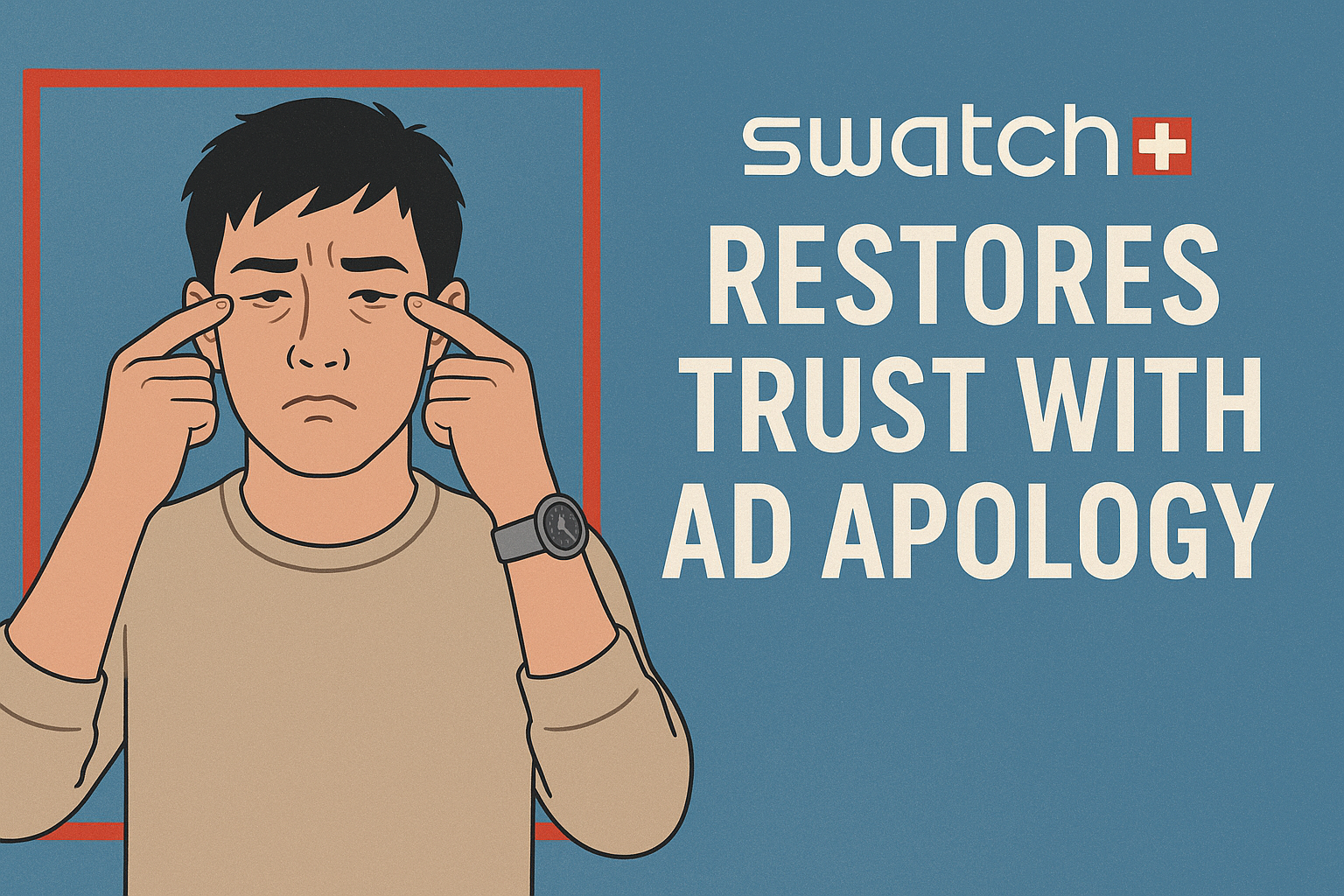
In the luxury fashion and watchmaking industry, brand image is everything. This week, Swatch Restores Trust With Ad Apology, a headline that underscores the company’s quick response to criticism following a controversial campaign. The Swiss watchmaker, globally known for its bold designs and accessibility, issued a public apology after an advertisement triggered backlash, particularly in China.
The controversy centered on an image promoting the Swatch Essentials collection, where an Asian male model was shown pulling the edges of his eyelids upward and backward — a gesture widely recognized as derogatory and racist. Swiss public broadcaster SRF first reported the issue, and it quickly spread across international media platforms.
Swift Reaction from Swatch
The company acted quickly to prevent further reputational damage. In a statement on Instagram, Swatch said: “We sincerely apologize for any distress or misunderstanding this may have caused.” The brand emphasized that it had “immediately removed all related materials worldwide” and promised to treat the matter with the utmost importance.
By moving decisively, Swatch Restores Trust With Ad Apology, not only addressing consumer concerns but also setting a precedent for how global brands can take responsibility when cultural sensitivities are overlooked.
Social Media Backlash in China
China remains one of the largest markets for luxury products, and consumer sentiment there can significantly impact brand success. Following the campaign, social media platforms in China exploded with criticism, with top influencers condemning the ad for its insensitivity.
Swatch recognized the gravity of the situation and extended its apology across platforms, including the Chinese social network Weibo, posting in both Chinese and English. By doing so, Swatch Restores Trust With Ad Apology, ensuring that its message reached consumers in their native language and showing cultural awareness in damage control.
The Importance of Cultural Sensitivity
This incident highlights the fine line luxury brands must walk when marketing in diverse markets. A seemingly small creative choice can be interpreted differently across cultures, and the consequences of missteps can be severe.
The Dolce & Gabbana controversy of 2018 is a cautionary tale. The Italian fashion house faced boycotts in China after releasing culturally insensitive promotional videos for a Shanghai runway show. The backlash was so severe that the founders had to issue a personal video apology, and the brand suffered a lasting reputational hit.
In contrast, Swatch Restores Trust With Ad Apology by acting swiftly, offering an immediate and transparent acknowledgment of the mistake. This proactive approach may shield the brand from prolonged backlash.
Broader Industry Context
The timing of this controversy is particularly sensitive. Swiss watch exporters are already facing external challenges, including new tariffs in the United States and a prolonged slowdown in major markets like Japan and Hong Kong. According to recent industry figures, exports have declined significantly, raising pressure on watchmakers to protect brand loyalty and consumer trust.
Against this backdrop, Swatch Restores Trust With Ad Apology becomes even more critical. Any misstep risks amplifying existing business difficulties, and a quick apology helps maintain consumer confidence during turbulent economic times.
Global Reactions
While the ad campaign primarily sparked outrage in China, international observers also weighed in. Social media users across various countries debated the implications of the gesture, with many agreeing that the brand’s decision to apologize quickly was the right one.
For global companies, the ability to manage crises across multiple regions is crucial. By ensuring the apology was multilingual and distributed globally, Swatch Restores Trust With Ad Apology not just in China, but worldwide, reassuring diverse audiences of the company’s commitment to respect and inclusivity.
Lessons for Global Brands
The incident serves as a reminder that successful marketing requires more than creativity. It demands deep cultural understanding and sensitivity to avoid offense. In today’s connected world, a campaign in one region can quickly become global news, and missteps can damage a brand’s reputation across multiple markets.
Swatch Restores Trust With Ad Apology because the company recognized these dynamics and acted accordingly. Brands that delay responses or fail to take responsibility often face harsher consequences. Swatch’s swift apology and removal of the ad demonstrate a crisis management strategy rooted in accountability.
Consumer Trust and Brand Reputation
Consumer trust is fragile, especially in the luxury sector where emotional connections and cultural identity play key roles in purchasing decisions. By issuing a sincere apology and emphasizing its commitment to learning from the mistake, Swatch Restores Trust With Ad Apology in a way that may even strengthen its long-term reputation.
Customers often value honesty and accountability as much as product quality. Swatch’s acknowledgment of its error reflects a willingness to listen and adapt, qualities that resonate with modern consumers who increasingly demand ethical and socially responsible practices from brands.
Comparisons with Past Incidents
The luxury industry has faced several similar controversies in recent years. From H&M to Gucci, many brands have been criticized for cultural insensitivity, with varying degrees of fallout. Some responded poorly, leading to long-term boycotts, while others managed to recover through thoughtful apologies and meaningful change.
By comparison, Swatch Restores Trust With Ad Apology stands out as a positive case study. The company avoided defensiveness, took immediate corrective action, and communicated across the most affected markets, offering lessons for competitors on how to handle sensitive issues effectively.
Looking Ahead
The Swatch incident will likely become a case study in global marketing, cultural awareness, and brand reputation management. As the company continues to expand in Asia and navigate economic challenges in the West, maintaining consumer trust will remain vital.
Moving forward, Swatch Restores Trust With Ad Apology not just through words, but by implementing stronger internal review processes for campaigns. By engaging diverse voices and perspectives during creative development, Swatch can reduce the risk of future cultural missteps.
Conclusion
The controversy surrounding Swatch’s ad campaign underscores the complexities of marketing in a globalized world. What began as an oversight quickly evolved into an international issue. Yet, by responding swiftly and sincerely, Swatch Restores Trust With Ad Apology, setting an example for how brands can take responsibility and repair consumer relationships.
In an era where reputations can be damaged overnight, Swatch’s handling of this incident highlights the importance of cultural sensitivity, quick decision-making, and accountability. For consumers and competitors alike, the takeaway is clear: trust can be lost in a moment, but with the right response, it can also be restored.